Station
Water Connects Life
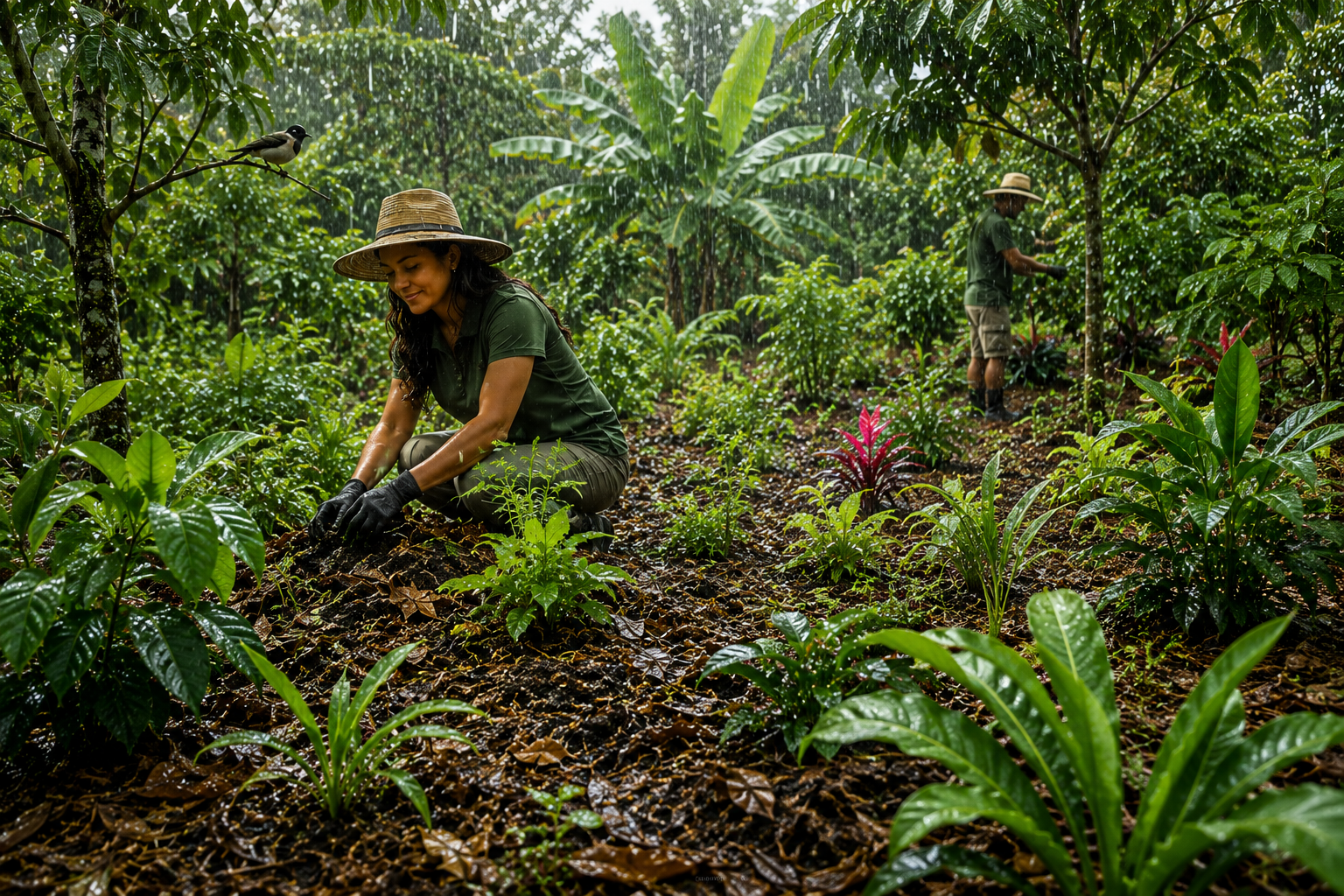
Water is one of the great connectors of life.
It moves through clouds, rainfall, soil, roots, leaves, rivers and oceans. Every living organism depends upon water, and every ecosystem is shaped by the way water flows, is stored and is shared.
Agroecology recognises that healthy food systems depend not only on the amount of water available, but also on how landscapes receive, retain and cycle water.
Healthy soils act like living sponges. Organic matter, roots, fungi and soil organisms help absorb rainfall and store moisture. Plants slow evaporation, protect soil surfaces and contribute to local humidity through transpiration.
At Ediblescapes, water is conserved through living ground cover, mulching, diverse vegetation and the continual addition of organic matter. These practices help retain moisture within the soil and support biological activity throughout the year.
Water also connects people and communities. Decisions about land use, vegetation, soil care and food production influence how water moves through landscapes and who benefits from it.
Agroecology encourages practices that slow, store and share water within living systems. By working with natural water cycles, landscapes can become more resilient to drought, heavy rainfall and changing climatic conditions.
As you explore Ediblescapes, observe where water may be moving, stored or exchanged. The health of the garden depends upon countless visible and invisible water relationships connecting all forms of life.
A question to consider
Where is water moving through this garden right now?
Continue the trail
Explore all stations ▼
Read this place through another lens
Ediblescapes can be explored through many interconnected ways of reading the garden — including permaculture, syntropic practice, living biology, biocultural food knowledge, agroecology, and commons-based community care.