Station
Nature Cycles Everything
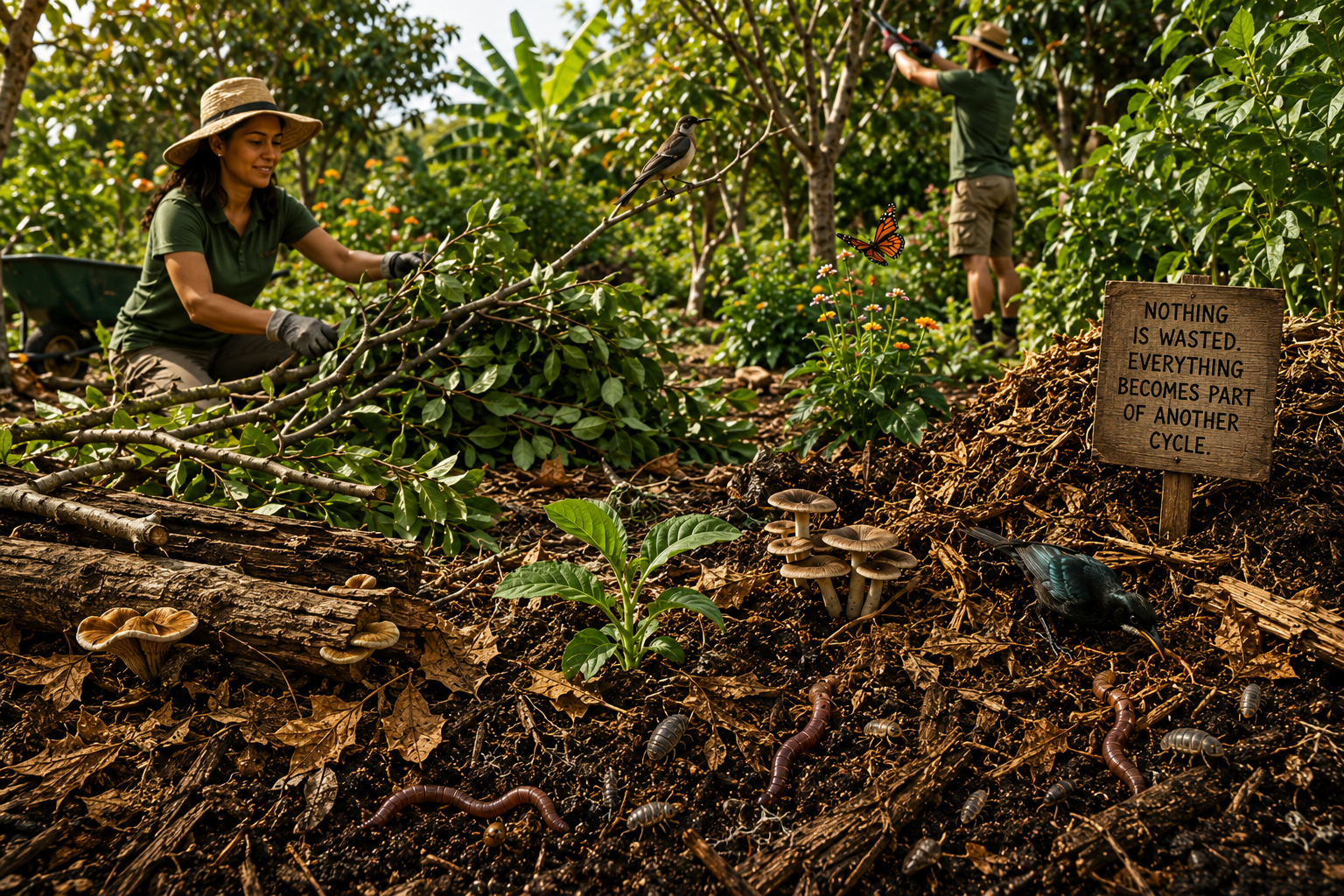
Agroecology recognises that living systems are sustained through cycles.
In nature, very little is wasted. Fallen leaves become mulch. Dead roots feed soil organisms. Nutrients are recycled through decomposition. Water moves through plants, soil and atmosphere. Energy captured from sunlight flows through food webs and ecological relationships.
These continual cycles help maintain fertility, productivity and resilience over time.
Agroecology seeks to work with these natural processes rather than relying on continual external inputs. By supporting nutrient cycling, water retention, decomposition and biological activity, food systems can become increasingly regenerative and self-renewing.
At Ediblescapes, these cycles can be observed throughout the garden. Pruned branches and leaves are returned to the soil as mulch. Organic matter decomposes and contributes to fertility. Roots, fungi and microorganisms participate in the continual transformation of plant material into nutrients that support new growth.
The garden is not sustained by isolated actions, but by countless cycles occurring simultaneously. Biomass becomes soil. Soil supports plants. Plants produce food and organic matter. Organic matter returns to the soil. Each cycle contributes to the health of the whole system.
Agroecology helps reveal these relationships and encourages practices that strengthen them. Rather than viewing leaves, stems or plant residues as waste, they can be understood as valuable resources participating in the ongoing renewal of life.
As you explore Ediblescapes, look for evidence of these cycles. Observe mulch on the ground, decomposing leaves, new growth emerging from fertile soil and the many organisms involved in transformation. Nature continually recycles and renews itself through living relationships.
A question to consider
What materials around you are becoming resources for new life?
Continue the trail
Explore all stations ▼
Read this place through another lens
Ediblescapes can be explored through many interconnected ways of reading the garden — including permaculture, syntropic practice, living biology, biocultural food knowledge, agroecology, and commons-based community care.