Station
Many Species, Many Roles
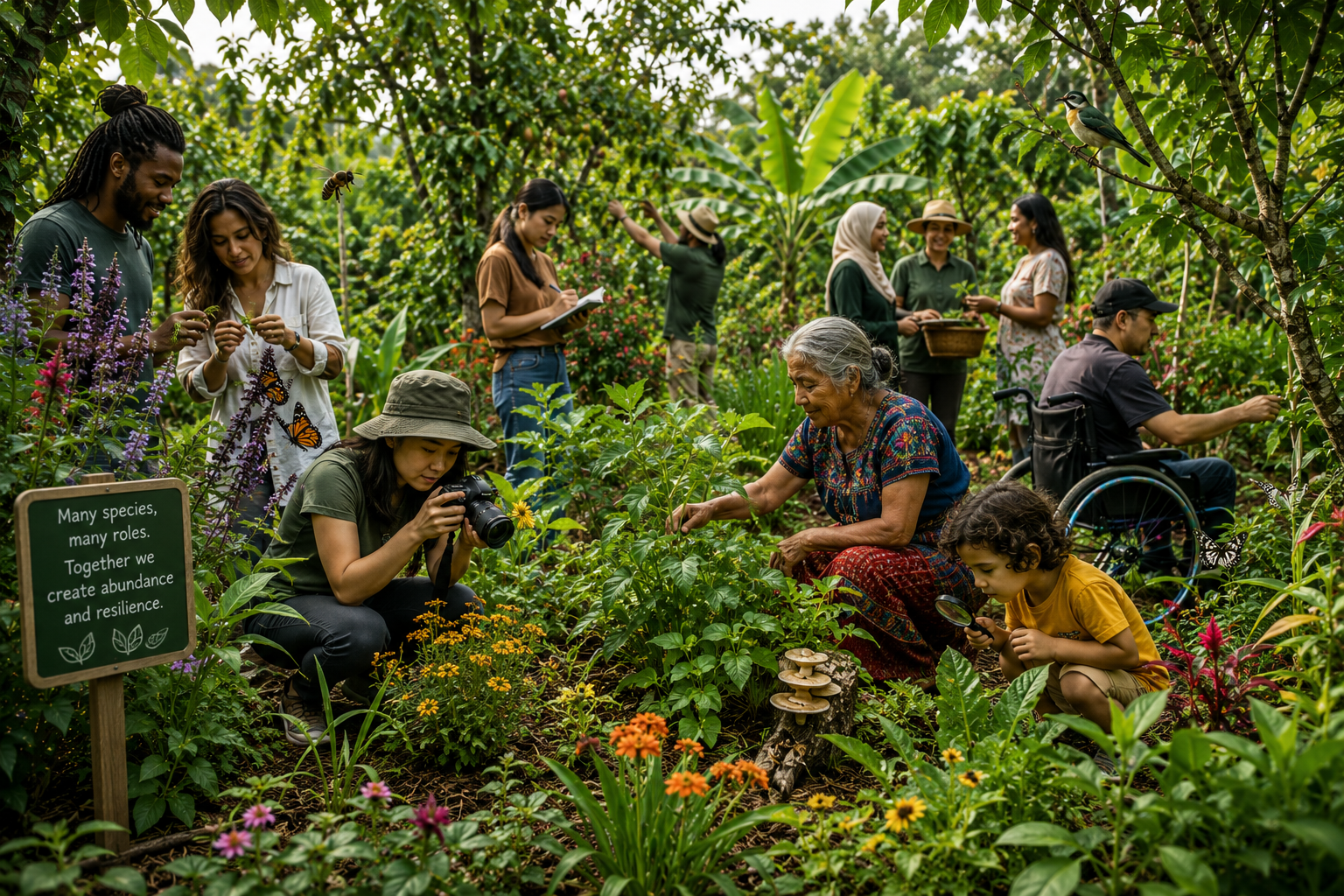
Agroecology recognises that healthy food systems depend upon many different forms of life performing many different roles.
Some plants produce food. Others provide shade, mulch, habitat, pollinator resources or soil improvement. Insects may pollinate flowers, decompose organic matter or help regulate pest populations. Fungi transport nutrients through the soil. Birds, reptiles and small animals participate in countless ecological interactions.
No single species performs every task.
Instead, resilience emerges through cooperation and diversity.
In natural ecosystems, many organisms contribute overlapping functions. If one species struggles, others may continue supporting the system. This diversity helps ecosystems adapt to changing conditions and recover from disturbance.
At Ediblescapes, visitors can observe a wide range of edible plants, support species, pollinators, decomposers and soil organisms. Each contributes to the health of the garden in different ways.
Agroecology values these relationships because productive food systems are not created by a single crop, but by living communities working together.
As you explore the garden, consider how many different roles are being performed simultaneously. Food production is only one part of a much larger ecological story.
A question to consider
What different jobs are being performed by the living things around you?
Continue the trail
Explore all stations ▼
Read this place through another lens
Ediblescapes can be explored through many interconnected ways of reading the garden — including permaculture, syntropic practice, living biology, biocultural food knowledge, agroecology, and commons-based community care.