Station
Food Systems Are Community Systems
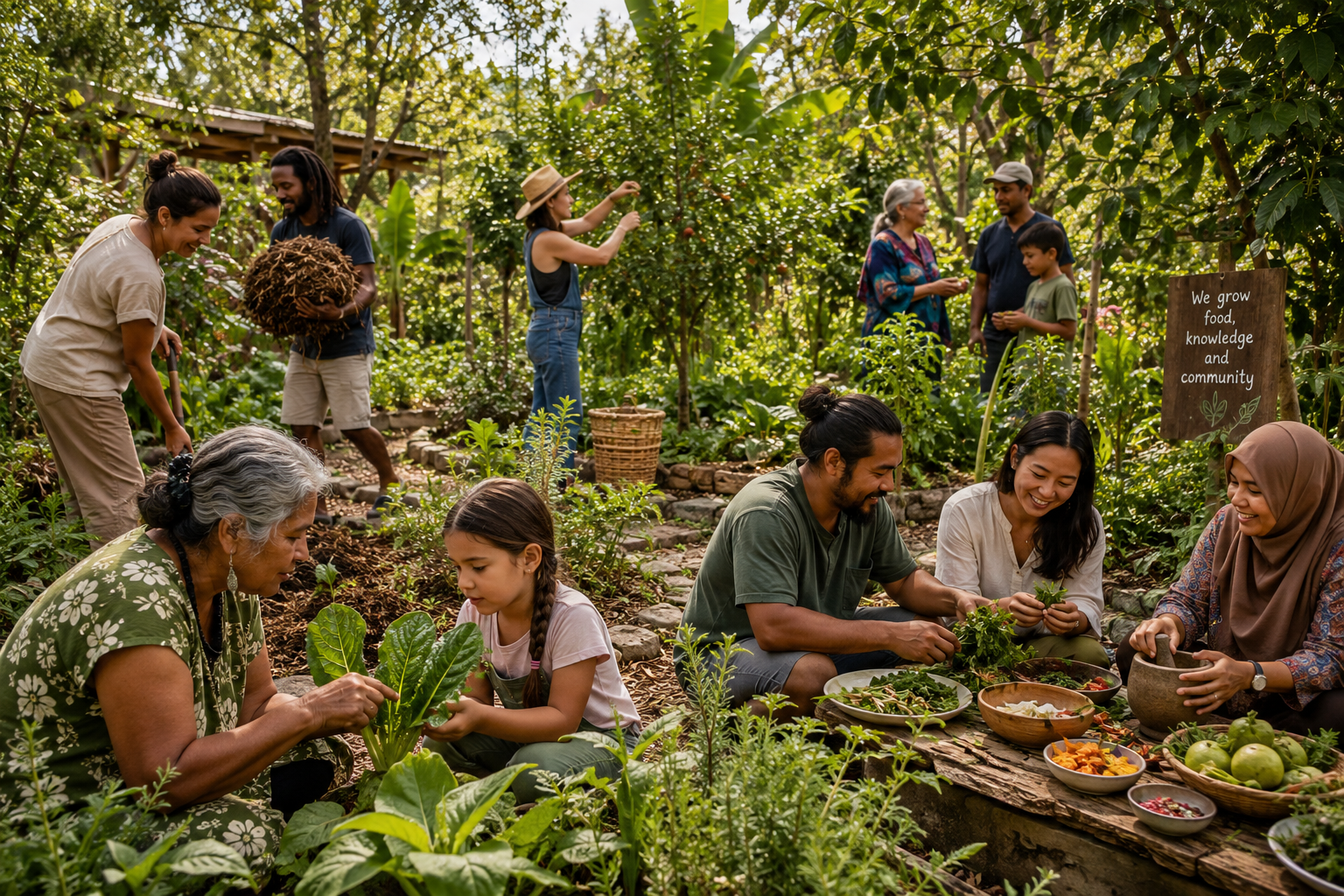
Agroecology recognises that food systems are not only ecological systems — they are also community systems.
Food depends upon relationships between people as much as relationships between plants, soil and water. Farmers, gardeners, seed savers, cooks, educators, families and communities all contribute to the ways food is grown, shared and valued.
Across cultures and throughout history, food knowledge has been developed collectively. People learn from one another, adapt practices to local conditions and pass knowledge between generations. Food therefore carries not only nutrients, but also stories, traditions, skills and cultural identity.
At Ediblescapes, food growing is connected to community participation. People contribute in different ways: planting, mulching, harvesting, observing, learning, teaching, preparing food and sharing knowledge. The garden functions not only as a place of production, but also as a place of connection.
Agroecology values these relationships because resilient food systems depend upon cooperation, participation and shared stewardship. Healthy communities support healthy food systems, just as healthy ecosystems support healthy communities.
As you explore Ediblescapes, consider the many people whose contributions help make food possible. Food systems extend far beyond individual plants and gardens. They are living networks of relationships connecting people, knowledge, culture and place.
A question to consider
Who helps make food possible in your community?
Continue the trail
Explore all stations ▼
Read this place through another lens
Ediblescapes can be explored through many interconnected ways of reading the garden — including permaculture, syntropic practice, living biology, biocultural food knowledge, agroecology, and commons-based community care.