Station
Learning Through Participation
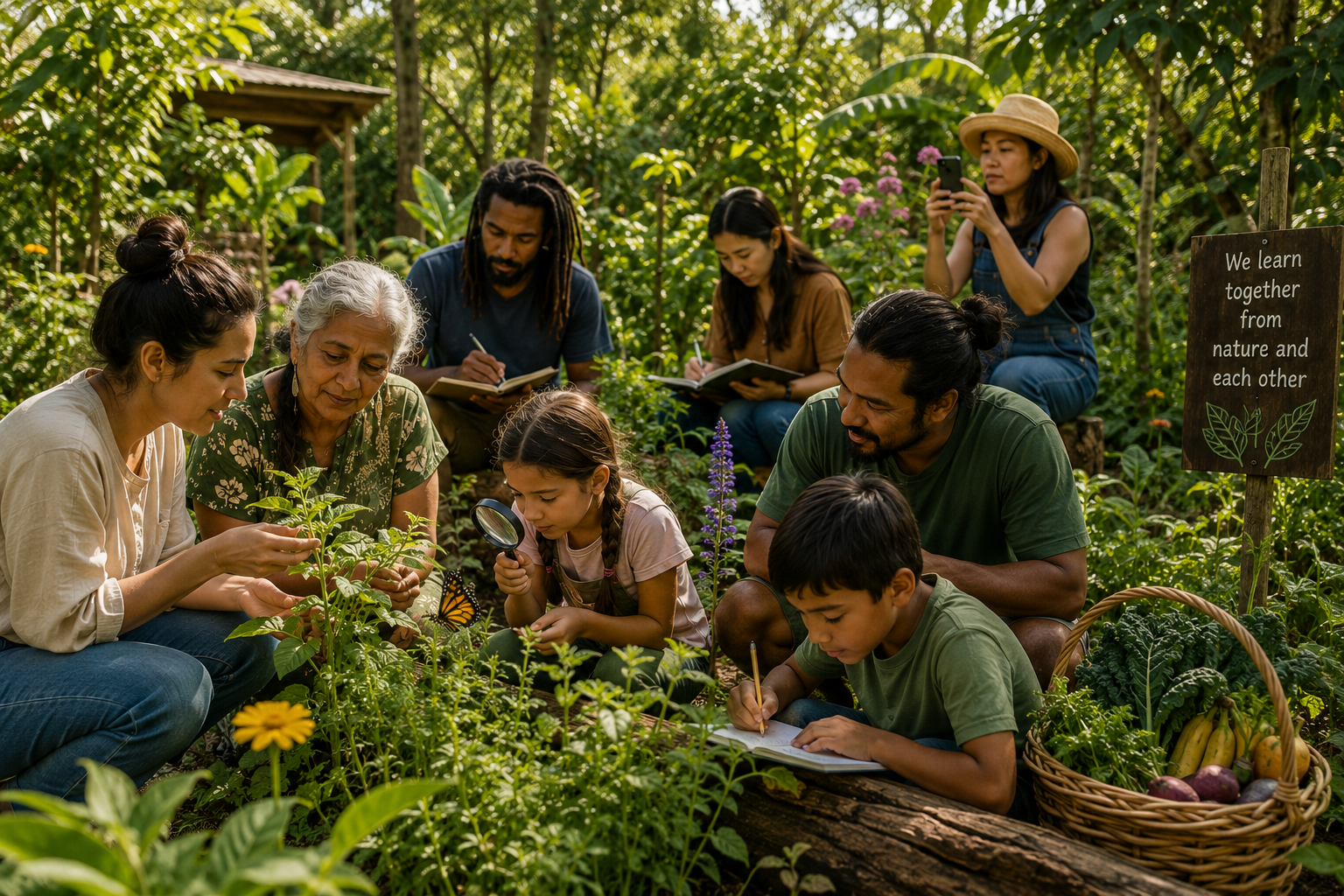
Agroecology is not only a way of growing food. It is also a way of learning.
Many forms of knowledge emerge through participation in living systems. People learn by observing seasonal changes, working with plants, caring for soil, preparing food, sharing experiences and adapting practices over time.
Unlike knowledge that is transmitted only through books or classrooms, agroecological learning often develops through direct experience. Observation, experimentation and collective reflection all contribute to understanding.
At Ediblescapes, learning occurs through participation. People discover plants by growing them. They learn about soil through mulching and composting. They understand biodiversity through observation. Food knowledge develops through harvesting, cooking and sharing meals together.
Agroecology values many forms of knowledge. Scientific understanding, practical experience, cultural traditions and community wisdom can all contribute to learning.
Because environments continually change, learning also continues. Every season, every harvest and every interaction creates new opportunities for observation and discovery.
As you explore Ediblescapes, consider what can be learned through participation. The garden is not only a place where food grows. It is also a place where knowledge grows through relationships between people, communities and living systems.
A question to consider
What can be learned by participating rather than simply observing?
Continue the trail
Explore all stations ▼
Read this place through another lens
Ediblescapes can be explored through many interconnected ways of reading the garden — including permaculture, syntropic practice, living biology, biocultural food knowledge, agroecology, and commons-based community care.