Station
Growing Futures Together
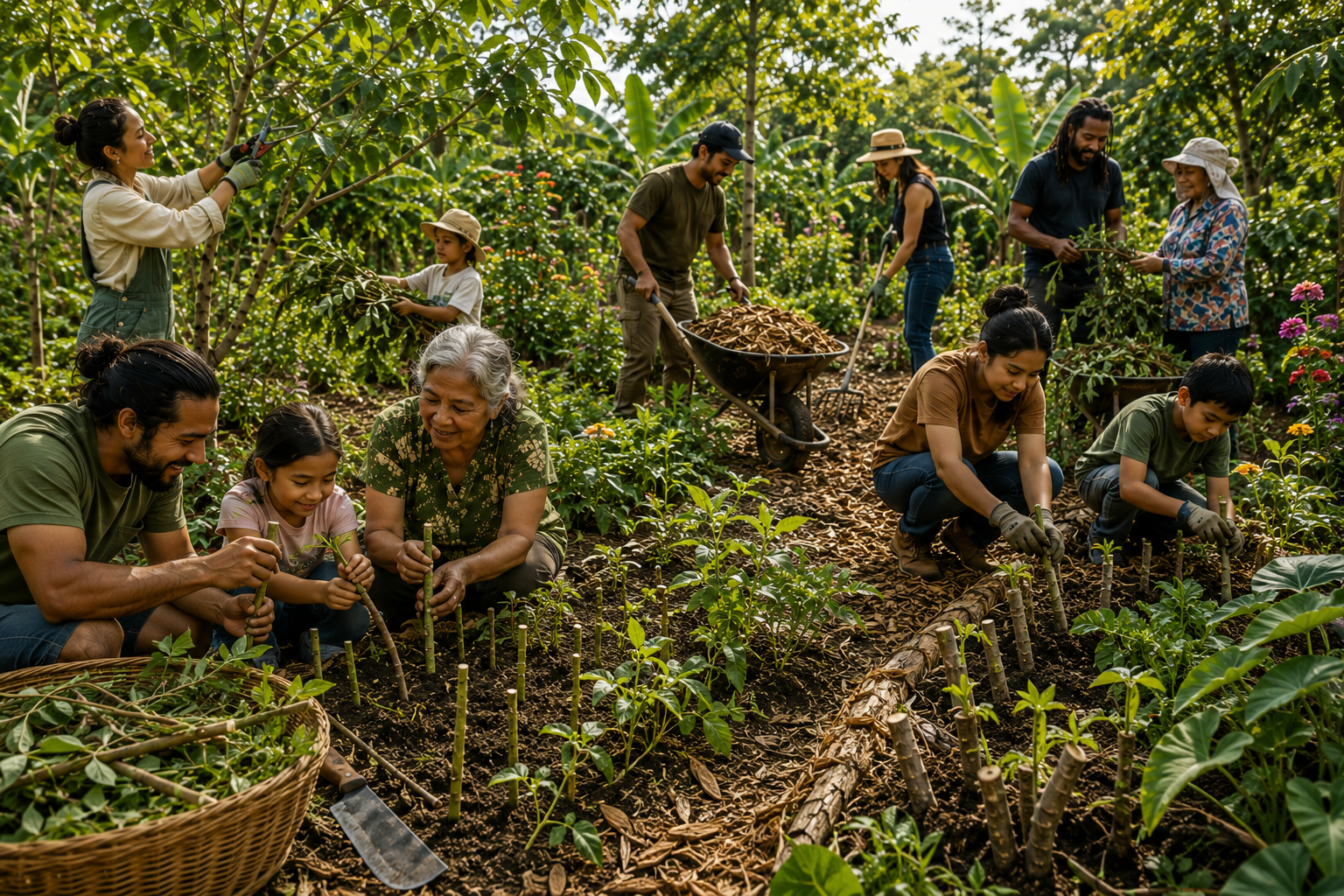
Agroecology invites us to think beyond individual gardens, crops and harvests.
The choices people make today influence the ecological, cultural and community systems that future generations will inherit. Soil health, biodiversity, water cycles, food knowledge and community relationships are all shaped through long-term care and participation.
Healthy food systems do not appear overnight. They are cultivated over time through observation, cooperation, learning and stewardship. Every act of planting, sharing knowledge, caring for soil, conserving water or supporting biodiversity contributes to the future resilience of communities and ecosystems.
At Ediblescapes, the garden serves as a living example of this ongoing process. Trees planted years ago now provide food, shade and habitat. Knowledge shared between participants continues to evolve. New generations encounter opportunities to learn, contribute and care for living systems.
Agroecology recognises that food systems are continually changing. Climate, culture, technology, ecology and community needs all influence how food is grown and shared. Rather than seeking a fixed solution, agroecology encourages adaptation, participation and collective responsibility.
As you explore Ediblescapes, consider the legacy being created through everyday actions. The future of food depends not only on ecological processes, but also on the choices communities make together.
Growing food can also mean growing knowledge, relationships, resilience and hope.
A question to consider
What kind of food system would you like future generations to inherit?
Continue the trail
Explore all stations ▼
Read this place through another lens
Ediblescapes can be explored through many interconnected ways of reading the garden — including permaculture, syntropic practice, living biology, biocultural food knowledge, agroecology, and commons-based community care.