Station
Plants Carry Stories
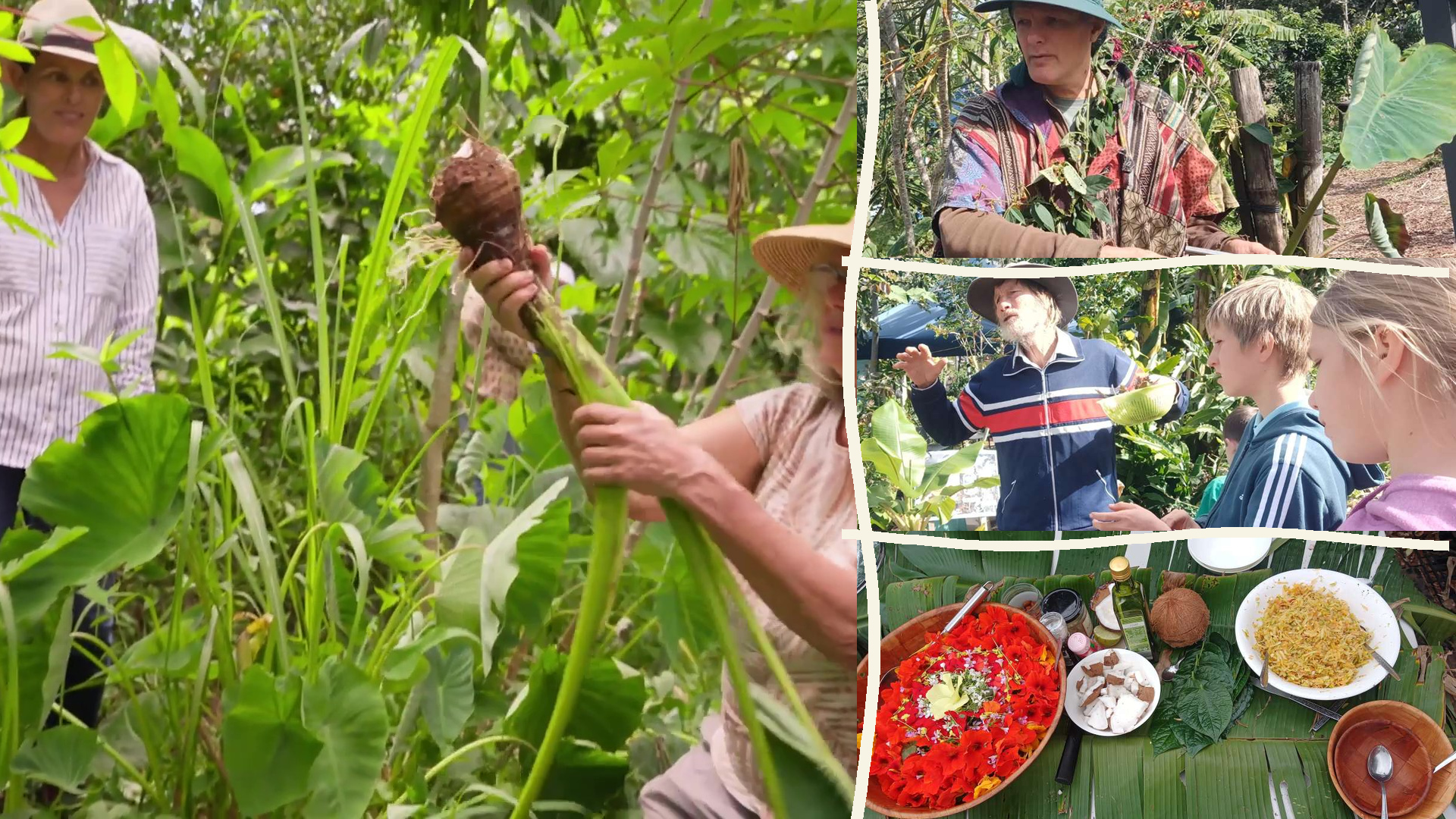
A plant can grow in one place while carrying relationships with many others.
Someone may recognise a leaf from a childhood garden, remember how a parent prepared it, know when a particular fruit should be harvested, or recognise a plant whose name is unfamiliar to everyone else nearby.
Plants travel through seeds, cuttings, gardens, migration, exchange and ecological movement. With them can travel tastes, practices, stories and ways of caring.
At Ediblescapes, a purple ube yam growing among mulberry, moringa and mandarin can suddenly connect a small part of the garden in Nerang with memories of the Philippines. Another plant may open a completely different geography for another person.
These connections do not make every plant or cultural practice the same, nor do they mean that every story can be known simply by looking.
They invite us to ask.
In a commons-based food landscape, diversity can therefore include more than the number of species growing together. It can also include the different memories, knowledge and relationships through which people recognise them.
Sometimes a plant is growing in more than one place at once: in the soil beneath us and in somebody's memory.
A question to consider
What story might be growing here?
Continue the trail
Explore all stations ▼
Read this place through another lens
Ediblescapes can be explored through many interconnected ways of reading the garden — including permaculture, syntropic practice, living biology, biocultural food knowledge, agroecology, and commons-based community care.