Station
Entering into Relationship
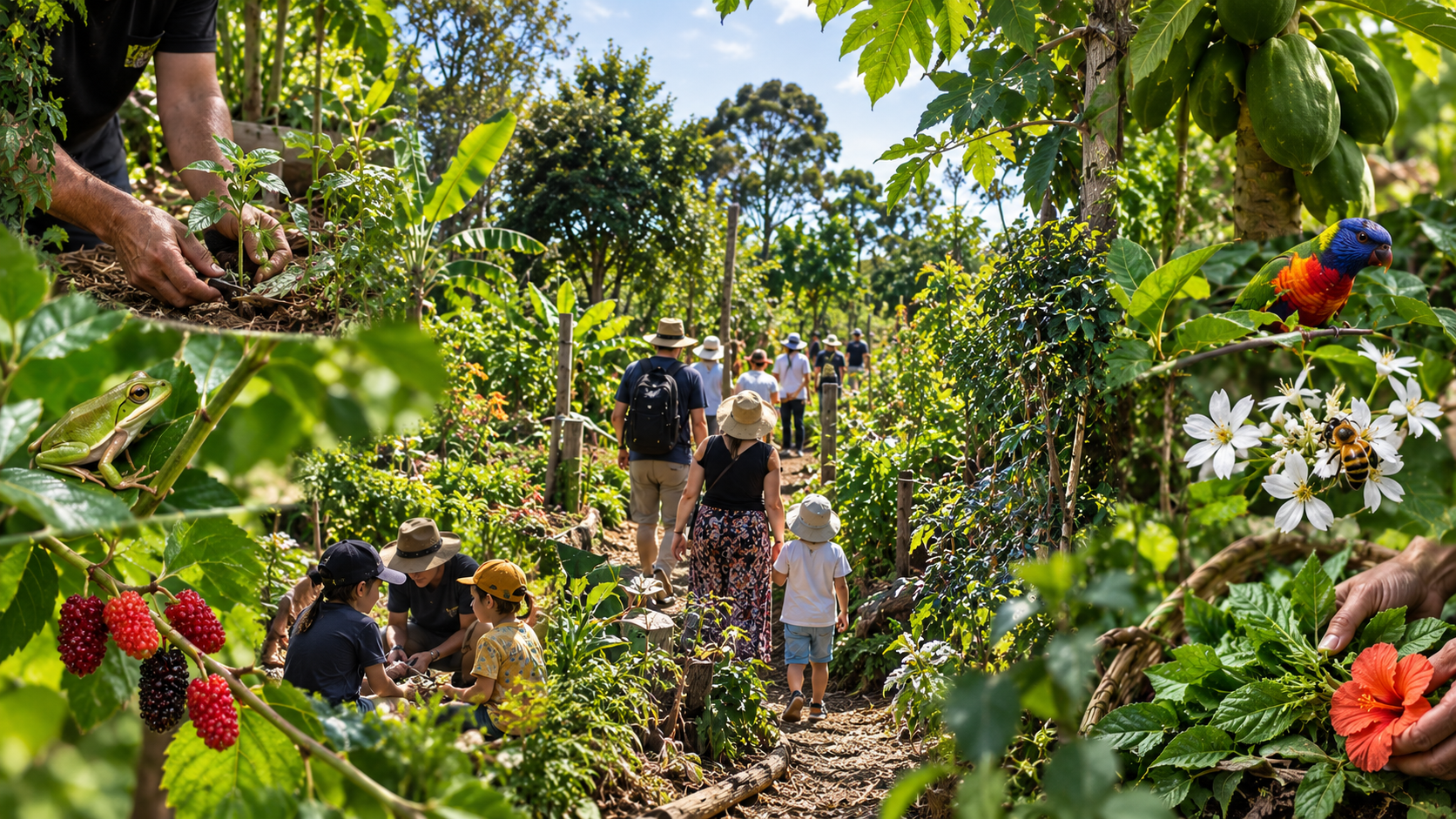
We can cross a boundary and physically enter a garden. But when do we really enter into relationship with it?
Perhaps it begins when we recognise a plant, taste a fruit, hear a bird, follow an unfamiliar path or remember another place. Perhaps it begins through meeting someone, asking a question, offering care — or returning often enough for the place to become familiar.
Not everyone enters through the same relationship. A child may follow a fruit. A gardener may notice what needs attention. A visitor may recognise a plant from another country. Birds, insects, water and seeds move through the garden along pathways very different from our own.
Across cultures and places, community gardens and shared food landscapes take many forms. There is no single model for cultivating the common. Ediblescapes is one situated expression within this pluriverse, shaped through accumulating relationships between people, plants, other living beings, culture and place.
A physical boundary can tell us where responsibility changes, but it cannot completely tell us where relationship begins or ends.
Perhaps entering a living garden is therefore less about passing through a gate and more about beginning to notice, participate and care.
A question to consider
What might invite you into relationship here?
Continue the trail
Explore all stations ▼
Read this place through another lens
Ediblescapes can be explored through many interconnected ways of reading the garden — including permaculture, syntropic practice, living biology, biocultural food knowledge, agroecology, and commons-based community care.