Station
Noticing What We Don’t Yet See
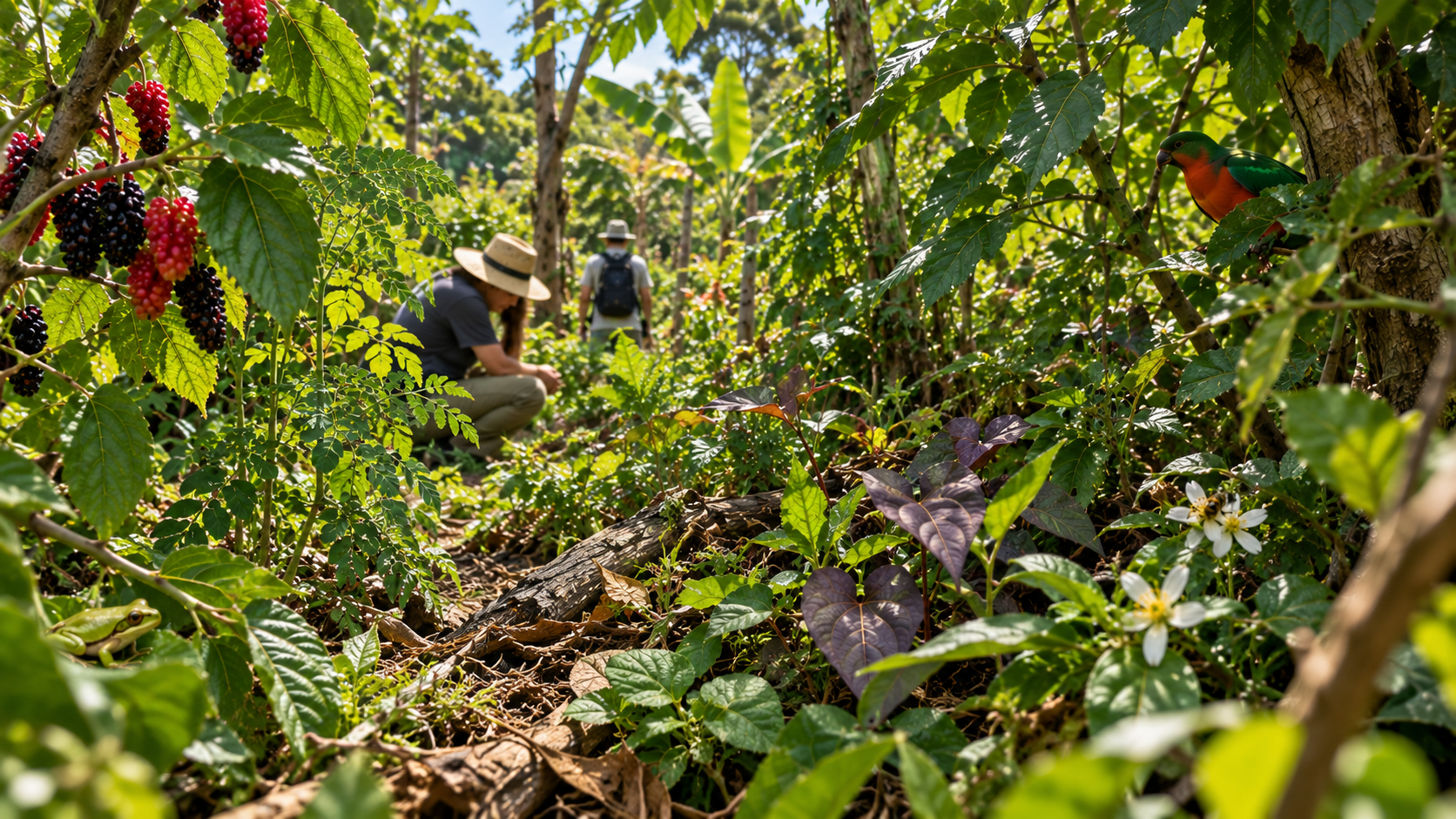
A garden can first appear as a mass of green. Then something catches our attention — a familiar fruit, a colourful bird, a flower, a person — and suddenly we begin to distinguish one life from another.
But recognition can also narrow our attention. While looking at the mulberries, we may miss the plants growing beneath them. While watching a striking bird, we may stop hearing the many other birds around us. What seemed to be one green landscape gradually reveals many different lives, relationships and stories.
Different people may also notice different things in the same place. A gardener, a child, a visitor carrying memories from another country, or someone with knowledge of particular plants may each encounter something others have overlooked.
The garden has not necessarily changed. Our attention has.
The Commons Lens invites us not to hurry towards naming or explaining everything. Sometimes the beginning of relationship is simply to slow down, become curious and recognise that there is more here than we first perceived.
Look. Ask. Listen. Look again.
A question to consider
What was there all along?
Continue the trail
Explore all stations ▼
Read this place through another lens
Ediblescapes can be explored through many interconnected ways of reading the garden — including permaculture, syntropic practice, living biology, biocultural food knowledge, agroecology, and commons-based community care.