Station
The Garden Reads Like a Story
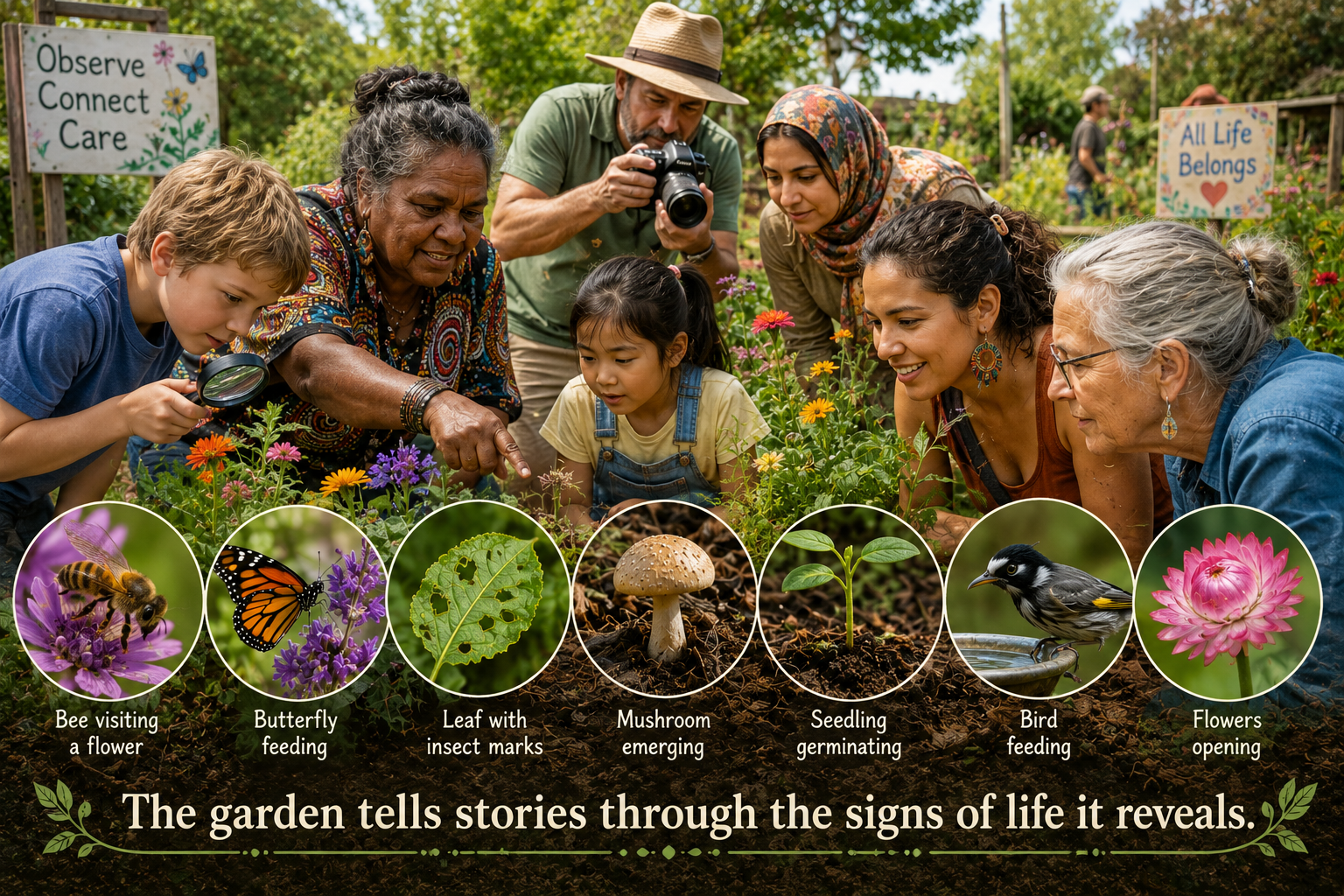
About This Station
Every living garden tells a story.
It is written not with words, but with signs of life.
A bee visiting a flower tells the story of pollination.
A butterfly resting on a leaf speaks of habitat and seasonal change.
Small feeding marks reveal that insects are part of the food web.
Mushrooms emerging after rain show that fungi are recycling organic matter beneath the soil.
New seedlings tell the story of renewal.
Birds carrying seeds connect one generation of plants with the next.
Flowers opening remind us that life is continually growing, adapting and reproducing.
These are not isolated events.
They are chapters in the continuing story of a living community.
As we slow down and observe more carefully, the garden begins to reveal relationships that were always present but often unnoticed.
Observation is the beginning of understanding.
Understanding is the beginning of care.
Every visit to the garden becomes an opportunity to discover another page in its living story.
A question to consider
What signs of life can you discover that tell today's story in the garden?
Continue the trail
Explore all stations ▼
Read this place through another lens
Ediblescapes can be explored through many interconnected ways of reading the garden — including permaculture, syntropic practice, living biology, biocultural food knowledge, agroecology, and commons-based community care.