Station
Many Knowledges, One Living Food System
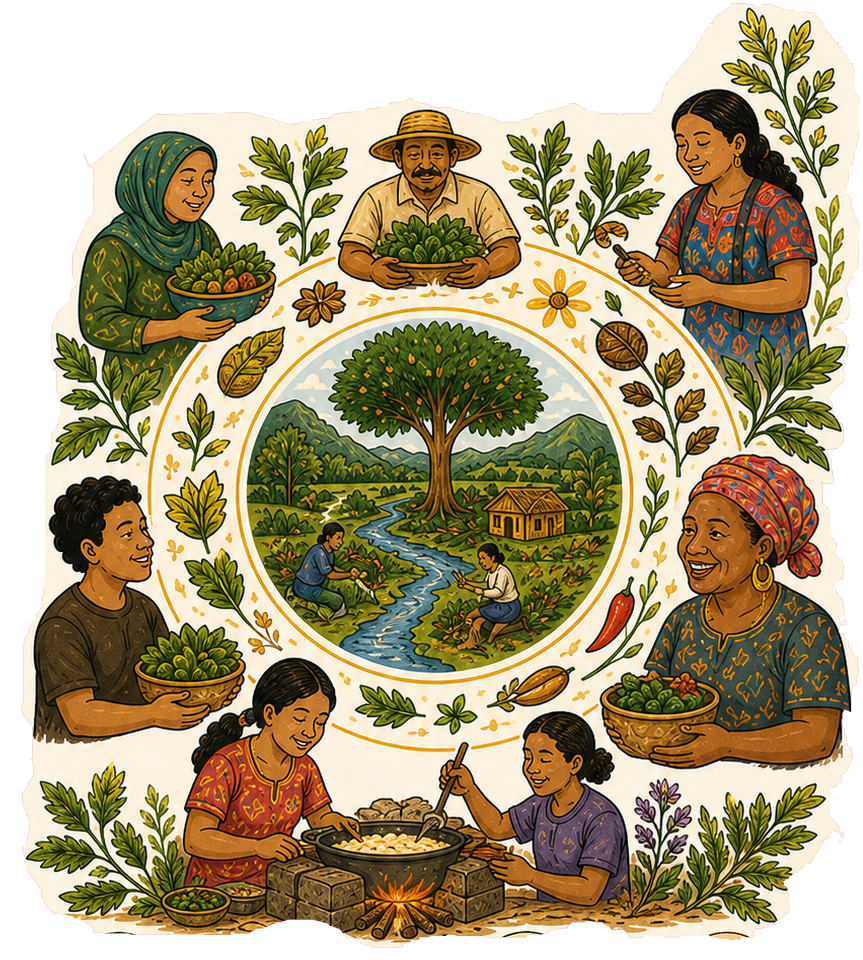
Reading food through many ways of knowing
There is not only one way to understand food, gardening, or ecology.
Across the world, communities have developed different relationships with plants, landscapes, climate, and nourishment. Indigenous knowledge systems, migrant food traditions, peasant agriculture, urban gardening practices, and ecological observation all contribute to the diversity of human food knowledge.
These ways of knowing are not static. They continue evolving through experimentation, adaptation, exchange, and lived experience.
Agroecology recognises that resilient food systems emerge from diversity — not only biological diversity, but also cultural diversity. Different communities often carry unique understandings about edible plants, seasonal rhythms, seed saving, soil care, medicinal uses, fermentation, cooking methods, and collective food sharing.
At Ediblescapes, the edible forest garden becomes a meeting place where many knowledges can coexist and interact. Visitors, volunteers, migrants, local residents, gardeners, and elders all contribute observations, stories, recipes, seeds, and practical experiences that enrich the shared learning environment.
This diversity of perspectives helps communities imagine more adaptive and connected ways of growing food together within urban public space.
The garden itself becomes a living conversation.
A question to consider
What knowledge about food do you carry — and what could you share with others?
Continue the trail
Explore all stations ▼
Read this place through another lens
Ediblescapes can be explored through many interconnected ways of reading the garden — including permaculture, syntropic practice, living biology, biocultural food knowledge, agroecology, and commons-based community care.