Station
Food is Memory, Culture, and Practice
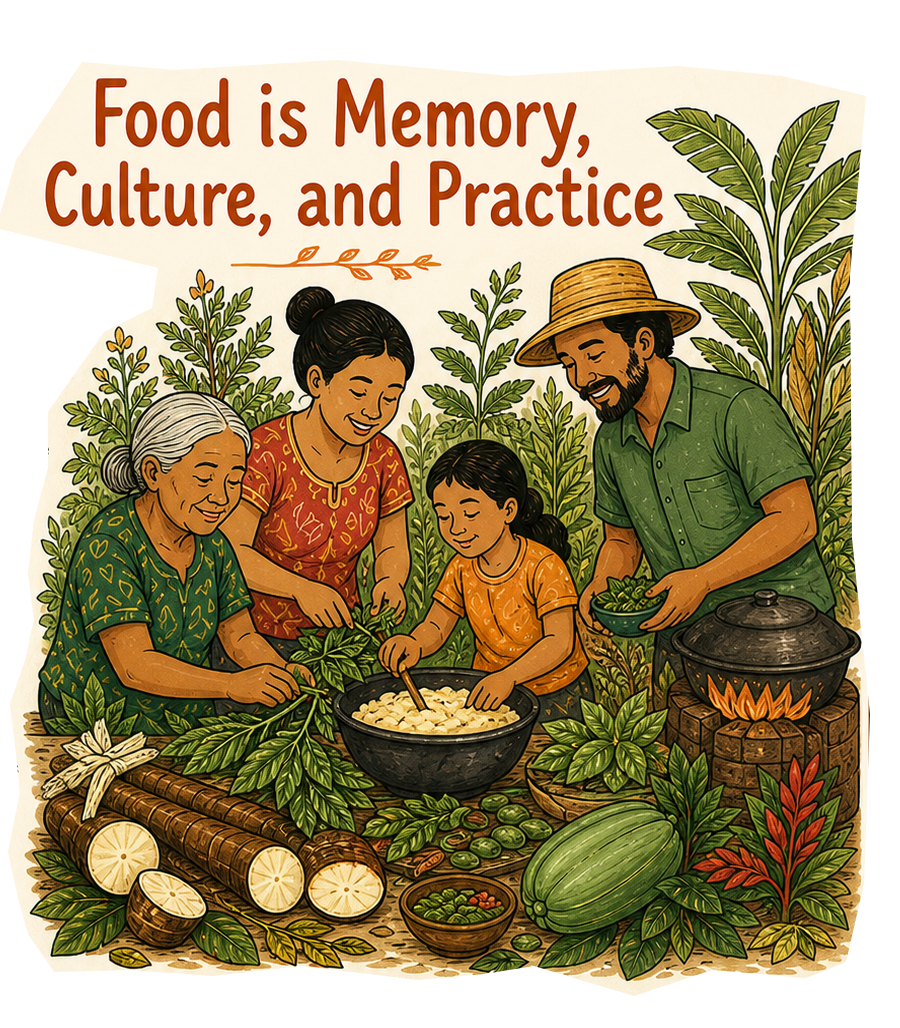
Reading food as culture, memory, and shared practice
Food is not only a biological necessity. It is also culture, memory, relationship, and care.
Across generations, communities around the world have developed ways of growing, preparing, cooking, fermenting, and sharing plants in relationship with local ecosystems and seasonal cycles.
In Ediblescapes, many plants growing within the edible forest garden are connected to living biocultural traditions. Species such as cassava, taro, aibika, katuk, choko, sweet potato leaves, and Queensland arrowroot are not simply edible crops. They are part of wider cultural practices that include timing, preparation techniques, cooking methods, medicinal understanding, celebration, and collective food sharing.
Biocultural food knowledge reminds us that food systems are not separate from people, ecology, or community life. They emerge through relationships between humans, plants, climate, microorganisms, and place.
This station invites visitors to reflect on how knowledge about food travels across generations and cultures. Recipes, preparation methods, gardening practices, and shared meals are all forms of living knowledge that continue evolving through practice and exchange.
At Ediblescapes, community food preparation and shared meals are part of the learning process itself. The gathering space and Plant-Based Cultural Food Fire Station help transform harvested plants into opportunities for conversation, storytelling, experimentation, and collective care.
Food becomes more than consumption.
It becomes relationship.
A question to consider
Who taught you how to prepare food — and what stories came with it?
Continue the trail
Explore all stations ▼
Read this place through another lens
Ediblescapes can be explored through many interconnected ways of reading the garden — including permaculture, syntropic practice, living biology, biocultural food knowledge, agroecology, and commons-based community care.