
July 2026
July was a month of deliberate observation in the 90 m² garden. No pruning, planting, mulching or other intervention was undertaken. Instead, we walked through the area, observed its condition and recognised its buen vivir—the wellbeing emerging from relationships already established within the living system.
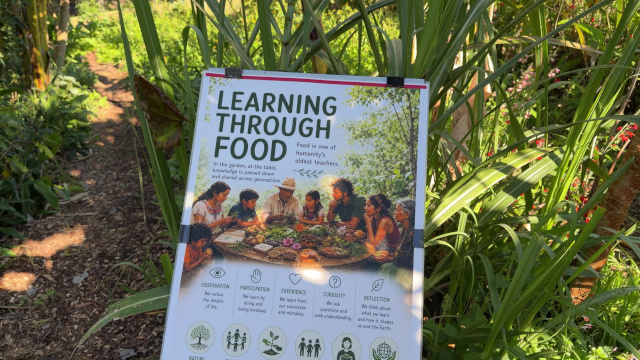
July 2026 — Observing the Garden’s Buen Vivir
A Month of Observation
During July, the 90 m² food-growing area was left largely without gardening intervention. No new plants were established, no biomass was added, and no pruning, mulching or reorganisation was undertaken.
This was a deliberate pause.
Rather than immediately asking what work should be done, we walked through the area and observed how the garden was living. We paid attention to its vegetation, soil cover, accumulated organic matter and the relationships developing among plants.
We greeted this condition as the garden’s buen vivir: wellbeing understood not through the performance of one plant, but through the capacity of the living community to continue through its relationships.
Sometimes caring for a garden requires action. At other times, it requires restraint—the patience to recognise what the garden is already doing for itself.
July Rainfall
The Gold Coast regional reference recorded 47.0 mm of rainfall during July, equivalent to a rainfall depth of 0.047 metres.
Across 90 m², this represents approximately 4,230 litres of rain falling on the garden surface. This calculation does not tell us how much water was absorbed, retained or lost. It gives us a reference for understanding the water received by the vegetation, soil and organic matter during the observation period.
The First Moving Record of the 90 m² Garden
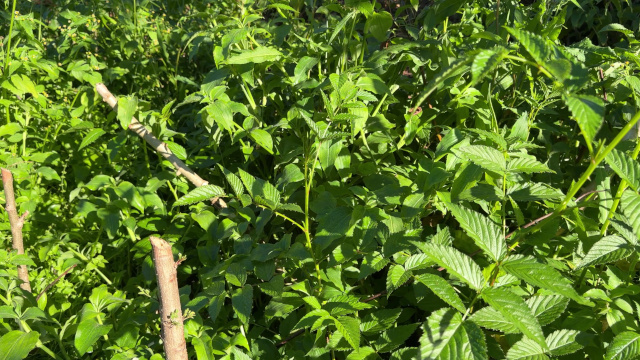
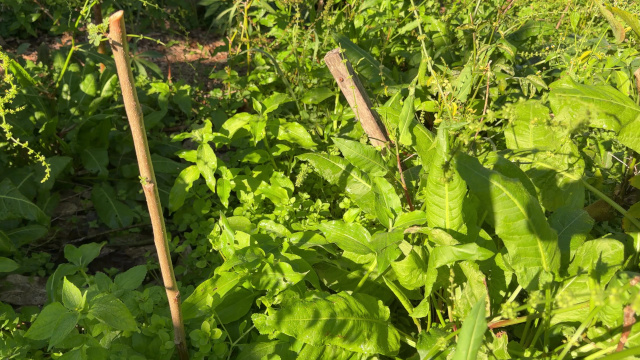
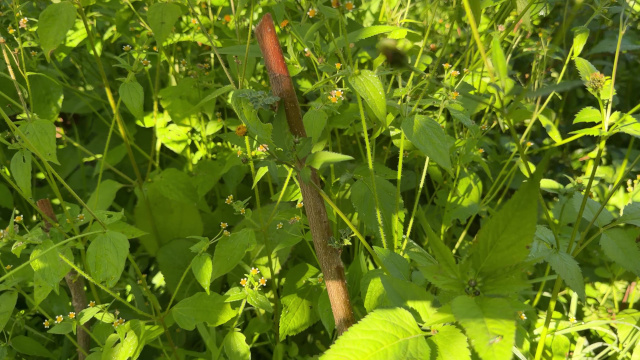
For the first time in the Garden Journal, we are presenting video observations of the 90 m² area.
Photographs preserve selected views. Video allows us to move through the garden and observe how its borders, pathways, growing areas and vegetation layers relate spatially to one another.
The garden was not reorganised for filming. These videos preserve its July condition as we encountered it.
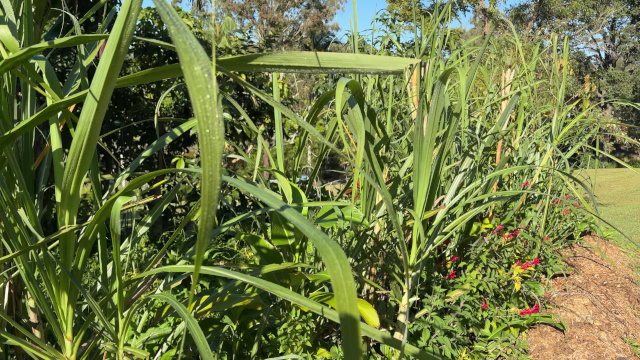
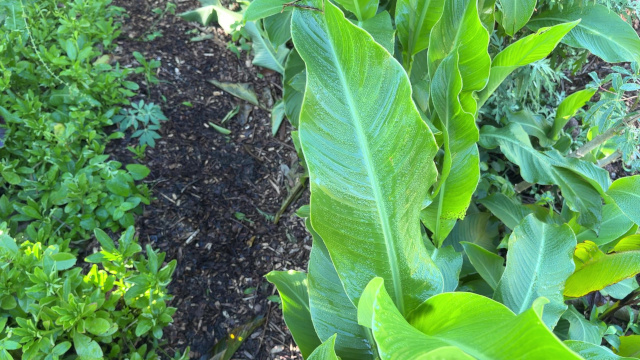
North Border
The first short observation begins at the northern border. It introduces the overall density and condition of the growing area from its edge.
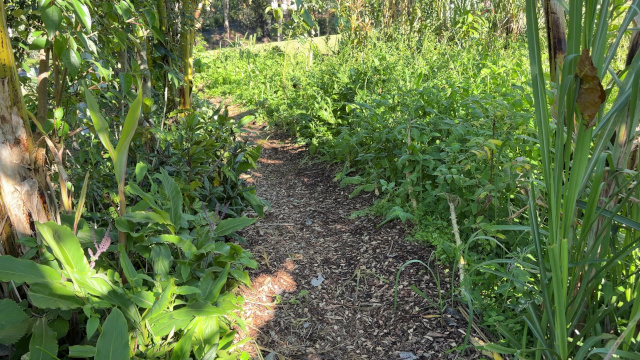
Pathway One
The second video moves from observing the garden at its boundary to walking within it. It reveals the relationship between the pathway, planted areas, soil cover and different vegetation layers.
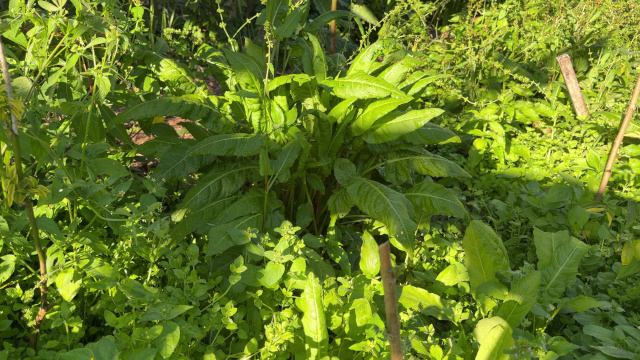
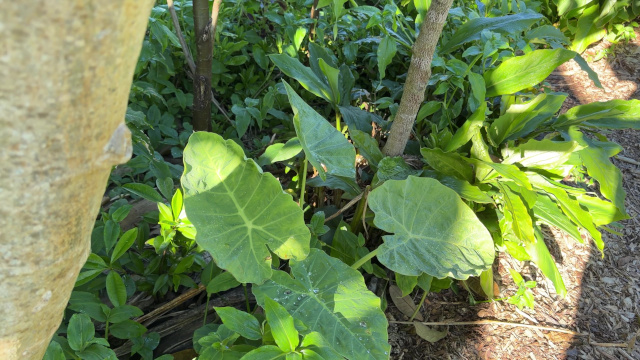
Third Garden Section
The third recording continues through another part of the 90 m² area, allowing differences in density, growth and spatial relationships to become visible.
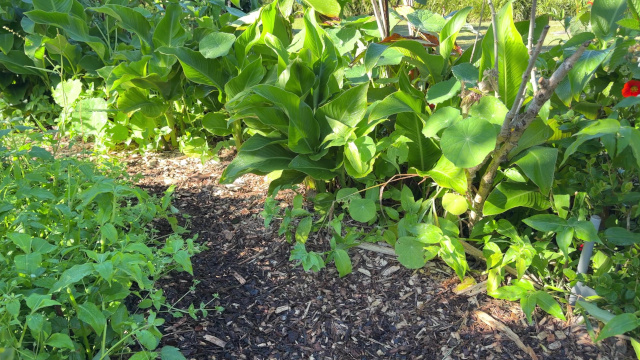
Fourth Garden Section
The fourth video completes this first moving observation of the garden’s July condition.
Together, these four videos establish a visual baseline. Future Garden Journals can return to the same pathways and sections to observe what persists, what changes and how the garden responds over time.
A Brief Harvest from the 90 m² Area
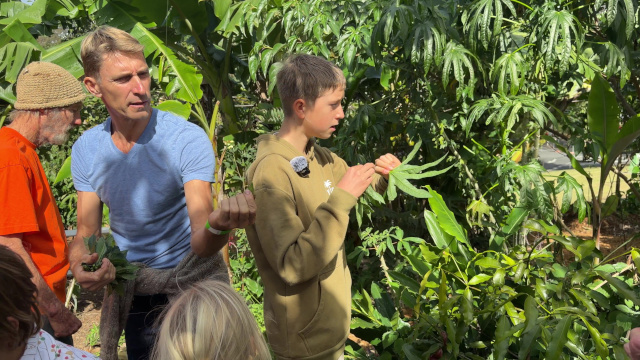
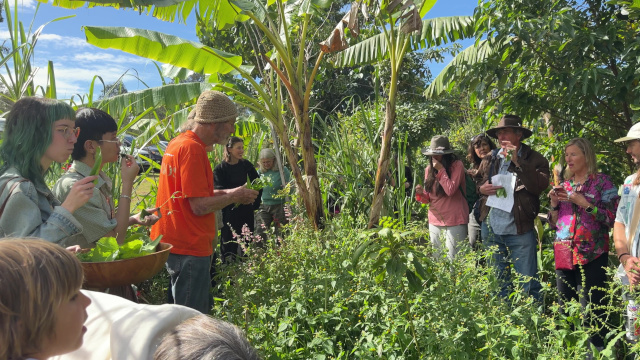
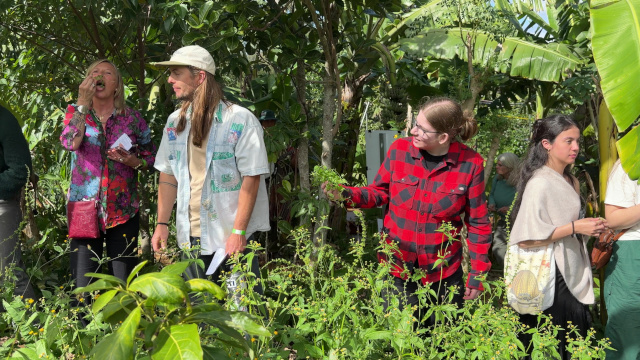
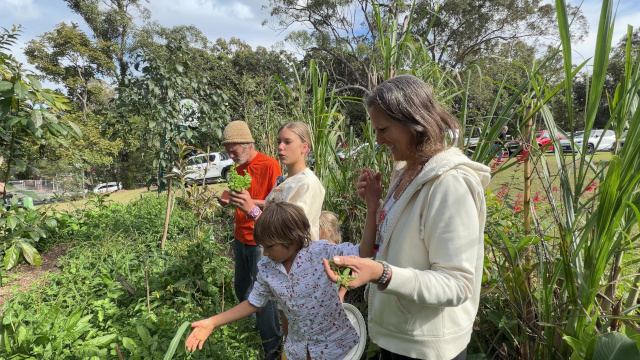
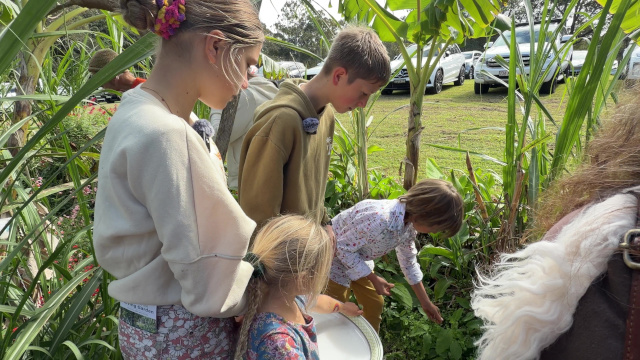
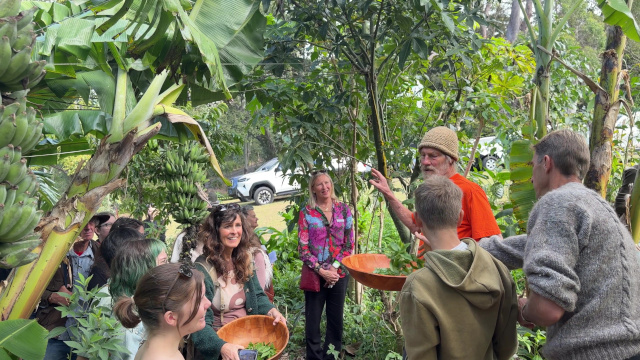
Although the area received no other gardening intervention, four gardeners spent approximately fifteen minutes facilitating a harvest-based learning experience in the 90 m² garden, engaging around 35 community participants in observation, conversation and shared thinking.
Approximately 30 litres of fresh green leaves were gathered. Because the harvest was recorded by volume and not weighed on a scale, its fresh weight is estimated at approximately 3 kilograms.
The leaves were used fresh within the following hours as part of the Botanical Bazaar cooking demonstration. Nothing from this harvest was dried or placed into storage, and none was left unused.
This harvest connected observation with practical learning:
observe → identify → harvest → prepare → share
A Whole-of-Ediblescapes Food Experience
The 30 litres recorded in the sidebar refer only to greens harvested from the 90 m² area. They represent one contribution to a much broader Ediblescapes harvest.
Other greens and underground foods were collected elsewhere in the garden, including:
- edible canna or Queensland arrowroot (Canna edulis);
- purple ube;
- yellow yam; and
- taro.
These additional foods were not measured and are therefore not included in the 90 m² sidebar data.
Together, the leafy greens, rhizomes, yams and taro demonstrated the diversity available within a perennial subtropical food garden during winter. The harvest emerged from multiple plant layers, different parts of the garden and diverse biocultural food traditions.
From Garden to Botanical Bazaar
The July learning cycle culminated at the Botanical Bazaar, bringing together the month’s harvesting, preparation and community learning through a whole-of-Ediblescapes cooking demonstration.
The cooking demonstration brought together produce from across Ediblescapes. The 90 m² greens were therefore one part of a whole-of-garden activity, alongside the other greens and tubers.
Approximately 2.0 gardener-hours have been attributed to the 90 m² record:
- 1.0 gardener-hour for four gardeners harvesting for approximately fifteen minutes; and
- an estimated 1.0 gardener-hour representing the 90 m² contribution to the wider cooking demonstration.
This is an indicative allocation rather than an exact measurement. The harvest and cooking were experienced by participants as one integrated Ediblescapes learning activity.
The produce became a means of sharing practical knowledge about recognising, harvesting, preparing and eating plants from a diverse living garden.
Learning Within an Open Garden
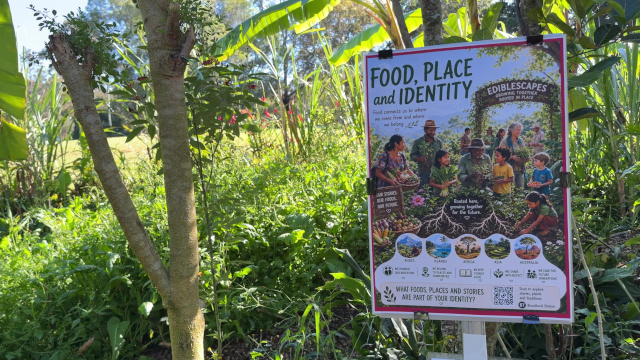
Ediblescapes is open to the surrounding park and can be approached from different pathways.
Some visitors arrive through the central entrance, where the introductory station is located. Others enter from the surrounding park through the garden’s interconnected pathways and encounter the learning stations as they move along the contour terraces and cross-garden paths.
The learning experience is therefore not dependent on one fixed sequence. Wherever visitors begin, the living garden provides the shared point of orientation.
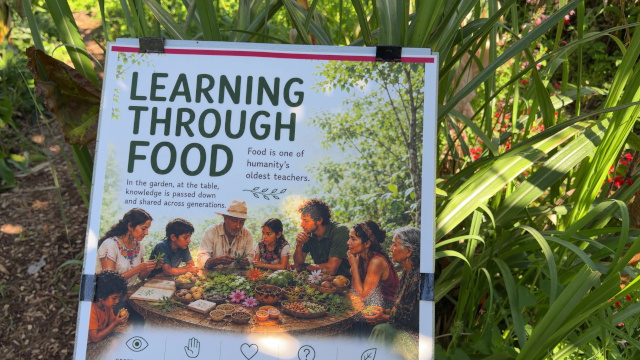
During July, preparations for the public presentation of the Biocultural Food Knowledge stations invited visitors to consider the connections among garden biodiversity, food practices, culture, memory and community learning.
What July Taught Us
July demonstrated that minimal intervention does not mean that nothing happened.
The garden continued receiving rain, exchanging nutrients, decomposing organic matter and responding to winter conditions. Apart from the brief facilitated harvest, our principal practice was observation.
The videos make this observation more accountable. They allow future gardeners and learners to compare the garden’s changing condition and ask:
- What persisted?
- What changed?
- Where did regeneration become visible?
- Where did the garden experience stress?
- What work did the living system perform for itself?
- When is intervention helpful, and when is restraint the better form of care?
July Reflection
During July, we did not ask first what work the garden required from us. We asked how the garden was living.
Walking its borders and pathways allowed us to recognise wellbeing as a quality of relationships—among soil, water, plants, organic matter, microorganisms, animals and people.
The pause did not separate us from the garden. It taught us another way of participating: through attention.
To observe the garden’s buen vivir is not to claim that everything is perfect. It is to recognise that the garden is alive, responding and continually becoming—and that sometimes an important gardening practice is learning how to notice.
Photo Gallery
A visual record of the garden’s changing conditions, seasonal activities, harvests and community learning throughout the month.
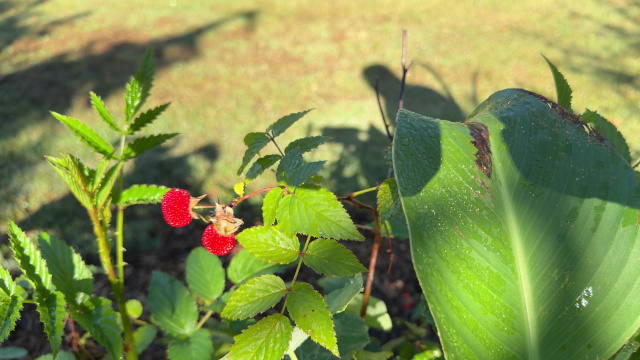
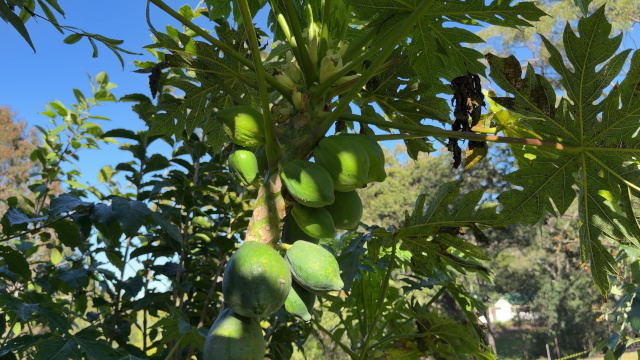
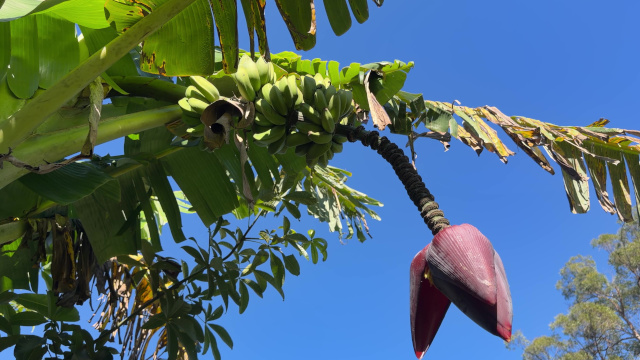
Diversity Grown
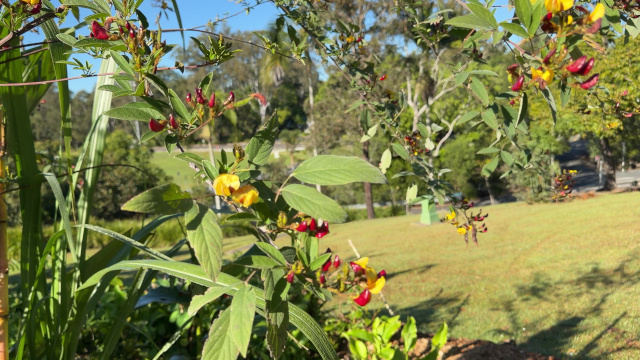
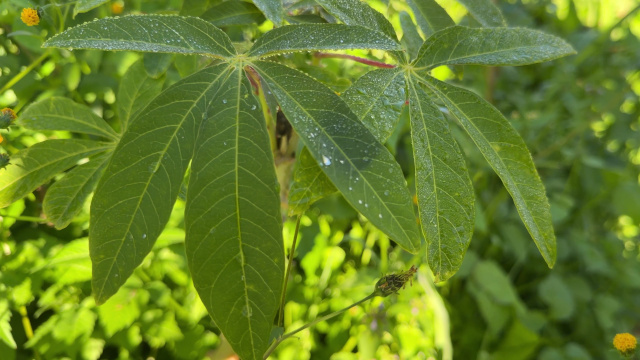
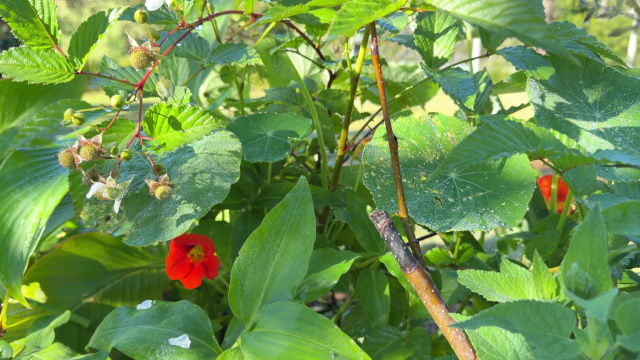
Food Harvests
Biomass and Soil Building
Propagation and Community Learning
This conversation remains open...
The garden never tells its whole story in a single month.
July invited us to slow down, observe and recognise what the garden continues to do through its own living relationships. The first video record of the 90 m² area now gives us a point of reference for noticing future change.
We invite you to return, explore the Learning Trail and continue observing how the garden responds through the seasons.
The next chapter begins next month.