
Commelina — A Spontaneous Food of the Living Garden
Three species of Commelina grow spontaneously at Ediblescapes Garden. Often regarded as weeds, these plants invite us to reconsider the relationships between spontaneous vegetation, edible plants, garden management and biocultural food knowledge. Through observation, research and shared experimentation, we are exploring what these plants can teach us.
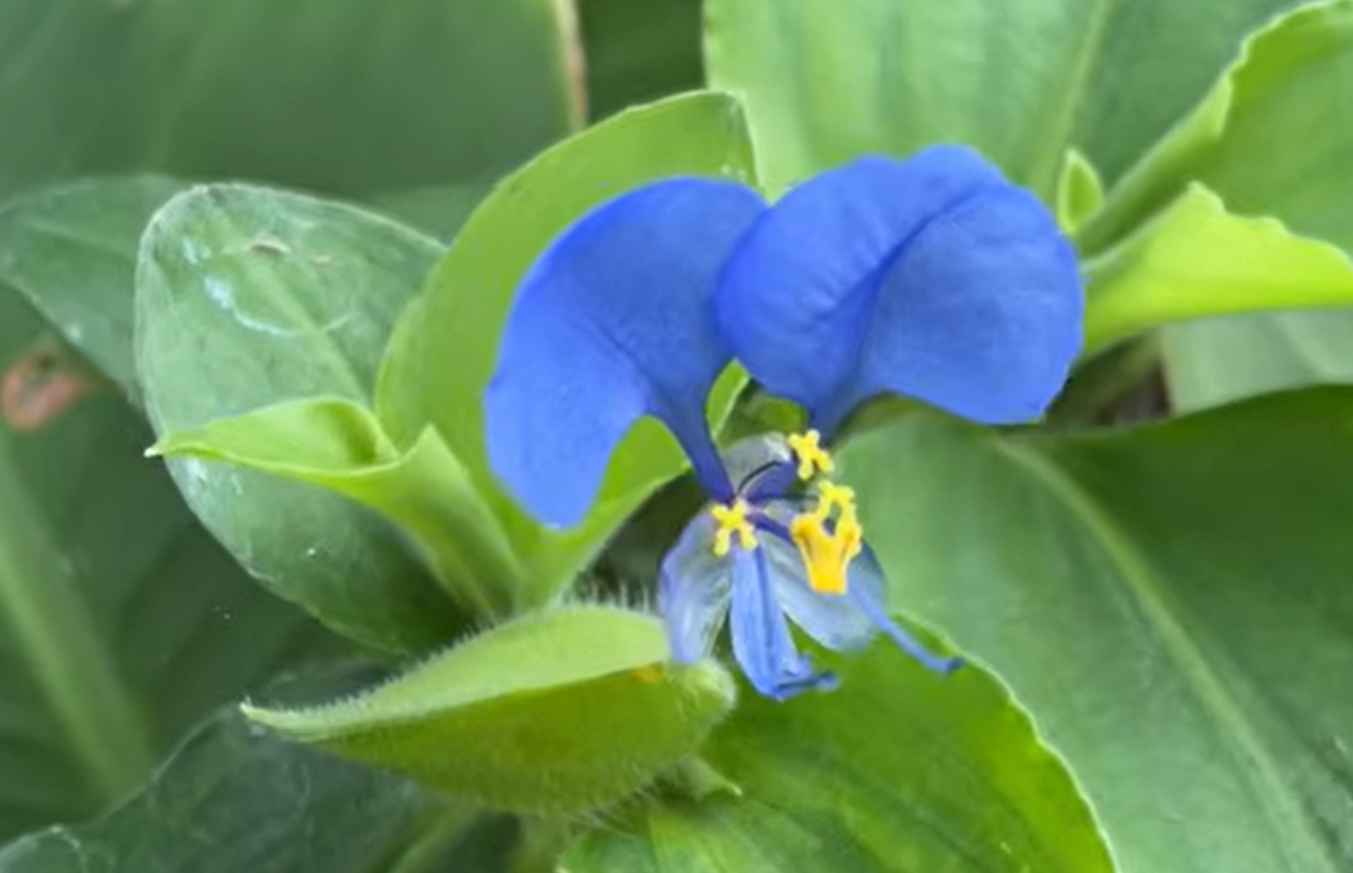
When a Weed Becomes Food
A spontaneous presence in the living garden
At Ediblescapes Garden – Country Paradise Parklands, Nerang, Commelina grows among cultivated plants without being deliberately planted.
We have observed what appear to be three species of Commelina, forming part of the spontaneous vegetation that responds to the garden's changing conditions.
These plants invite us to ask an important question:
When we call a plant a weed, what food knowledge and ecological relationships might we be overlooking?
Rather than considering every spontaneous plant an unwanted competitor, we are learning to observe its growth, seasonal behaviour, ecological functions and potential contributions to the garden.
Observing the plant through the seasons
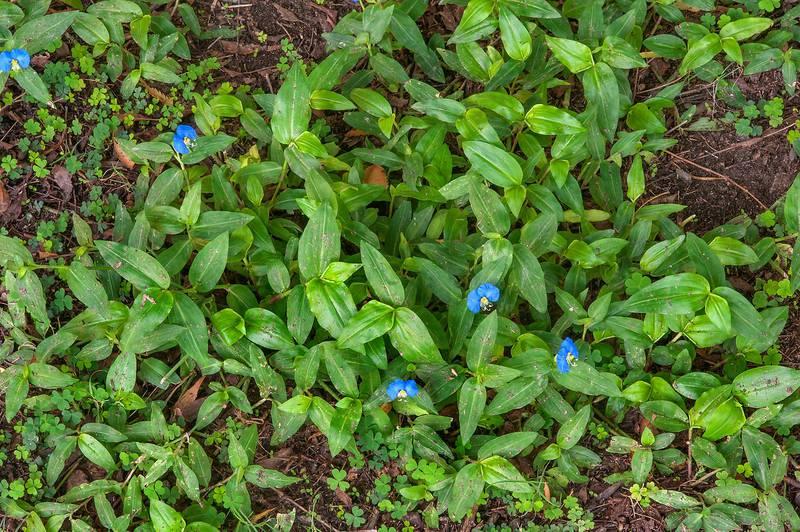
Commelina can grow vigorously during favourable conditions, covering soil and occupying spaces between other plants.
At Ediblescapes, we have observed its seasonal decline as conditions become hotter and drier.
Our management practice includes cutting the above-ground vegetation and leaving the biomass in place beneath mulch, allowing it to return organic material to the soil.
This practice connects spontaneous vegetation with the garden's ongoing processes of soil protection, decomposition and nutrient cycling.
It also raises a practical possibility: could some of this vegetation be harvested as food before the remaining biomass returns to the soil?
Rediscovering food knowledge
Research shared by Ediblescapes volunteer Kyle has opened further exploration of Commelina benghalensis, a species documented as having traditional vegetable uses in parts of Asia, including Pakistan.
This information encourages us to look beyond the conventional classification of the plant as a weed.
However, identifying a plant's traditional food use is only the beginning. Different species may have different characteristics, and cultural knowledge includes knowing which plants are harvested, which parts are used and how they are prepared.
The species present in our garden still require careful identification before we attribute particular food uses to them.
Learning through community practice
Commelina has also entered conversations and practical food explorations involving Ediblescapes participants, including Morgan, John, Kely and Simon, on different occasions.
These experiences are part of the garden's developing biocultural memory.
Photographs, video recordings, personal observations and conversations can help us recover how participants recognised, harvested, prepared and discussed these plants.
Rather than presenting those experiences as final conclusions, we want to document them as contributions to a shared learning process.
Food, ecology and garden management
The exploration of Commelina connects several dimensions of the living garden:
- Agroecology: recognising the functions and potential uses of spontaneous vegetation.
- Living Biology: observing growth, seasonal change, decomposition and relationships with soil.
- Biocultural Food Knowledge: investigating food traditions and the knowledge required for identification and preparation.
- Commons-Based Community Gardening: sharing observations, experiences and responsibility for caring for a public edible garden.
A plant previously treated only as vegetation to control may become a subject of research, cultural exchange and ecological understanding.
This does not mean every weed is edible, or that every species of Commelina can be used in the same way.
It means that careful observation and reliable knowledge can change how we understand the plants growing around us.
An open investigation
Our exploration continues.
We want to identify the different Commelina species growing at Ediblescapes Garden, review reliable documentation of their food uses, recover earlier conversations and recordings, and develop appropriate opportunities for shared learning.
We also want to understand how harvesting and vegetation management can complement each other within a living agroecological system.
The question is not simply whether a plant is a weed or a food. It is what relationships, practices and knowledge allow us to understand its place in the living garden.
Knowledge note: Published food-use records for a particular Commelina species should not be applied automatically to unidentified plants. This article documents an ongoing investigation and is not an instruction to consume unidentified vegetation.
Four Years of Conversations — From Recognition to Collaboration
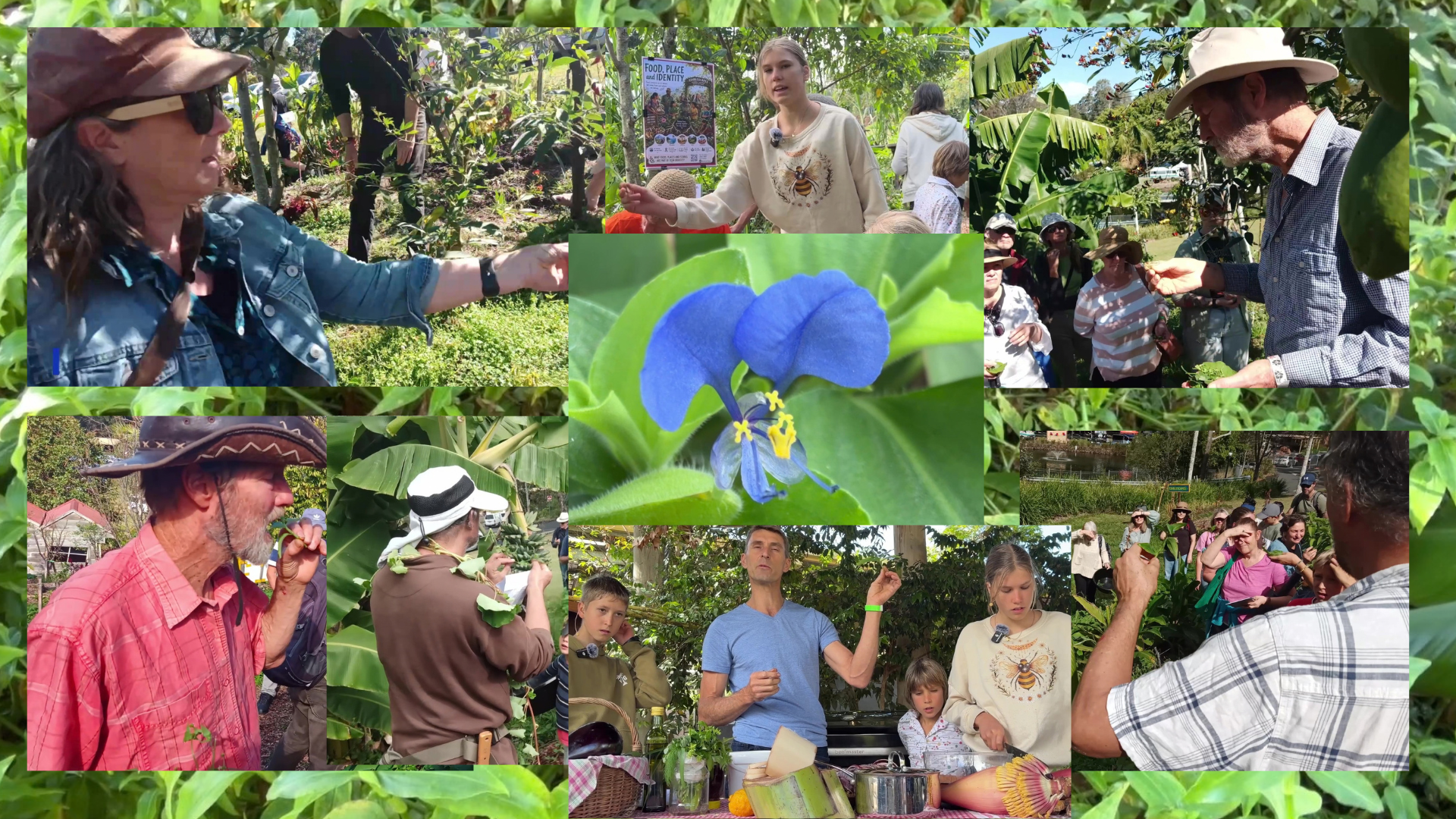
A photographic montage of encounters at Ediblescapes Garden and Botanical Bazaar gatherings, documenting how conversations about Commelina and related plants have developed through observation, botanical questions, harvesting, tasting and shared food preparation.
Across different years and generations, these encounters reveal living knowledge emerging through curiosity, cultural exchange, practical experience and collective learning.
Images drawn from Ediblescapes Garden's documentary video archive, 2022–2026.
Between 2022 and 2026, conversations about scurvy weed, Commelina and related plants appeared repeatedly during Botanical Bazaar activities involving Ediblescapes Garden.
The recordings bring together different people, occasions and approaches to understanding spontaneous vegetation.
2022 — Recognising an overlooked plant
Morgan introduced scurvy weed by inviting participants to identify a plant growing around them.
John Palmer continued the discussion, referring to the historical association between scurvy weed and the Endeavour voyage. He also spoke about plants commonly regarded as garden weeds and their potential food uses.
These conversations opened a question that would return in later years: what food knowledge might be overlooked when familiar spontaneous plants are treated simply as weeds?
2023 — Learning to distinguish similar plants
In 2023, Kyle brought greater attention to botanical identification and the limitations of common plant names.
He explained that plants commonly grouped under names such as “wandering Jew” may not all be suitable for consumption.
During another discussion, he drew attention to differences in plant size, leaf hairiness, stem joints and flower structure, cautioning participants against eating plants merely because they resembled familiar edible species.
These observations introduced an essential principle into the evolving conversation: recognising a plant as similar to an edible species is not the same as identifying it reliably.
2026 — From observation to harvesting and food preparation
By 2026, the conversation had developed further through contributions from Eleia, Simon and young foragers participating in a family cooking demonstration.
Eleia discussed harvesting a plant referred to as Commelina benghalensis.
Simon connected the experience of tasting spontaneous plants with a different approach to garden management.
Instead of viewing vigorous spontaneous vegetation only as a problem, he described how harvesting could become part of managing its growth while allowing other plants more space.
The discussion introduced a powerful idea: a plant's relationship with the garden can change as our knowledge and practices change.
Knowledge that develops across time
These recordings were not produced as a single research project. They emerged through separate encounters with plants, people and the garden over several years.
Seen together, they demonstrate how living knowledge accumulates through observation, questions, disagreement, caution, experimentation and cultural exchange.
The value of this record lies not in claiming that every question has been resolved, but in preserving how the questions and practices have developed.
The living garden becomes both a place of learning and an archive of that learning.
Botanical Identification — Similar Plants, Different Species

The name Commelina refers to a genus of flowering plants in the family Commelinaceae, which also includes Tradescantia.
These plants can share a creeping growth habit, fleshy stems, leaves with sheathing bases and small flowers. Their similarities help explain why common names such as “wandering sailor”, “wandering trad” and “scurvy weed” sometimes cause confusion.
Three Commelina species in south-east Queensland
Regional botanical references describe three species of particular interest:
- Commelina diffusa — Blue Commelina, a native species associated with the name scurvy weed.
- Commelina lanceolata — Queensland Wandering Sailor, another native species.
- Commelina benghalensis — Hairy Commelina, an introduced species regarded as an environmental weed in south-east Queensland.
The three species can appear similar, particularly when they are not flowering.
One useful identification feature is the flower. In the two native species described for south-east Queensland, the three petals are approximately equal in size. In C. benghalensis, the two upper petals are prominent while the lower petal is much smaller.
Hairiness around the leaf sheath can also assist identification, although this characteristic is variable and should not be used alone.
Why identification matters
During the Botanical Bazaar conversations recorded between 2022 and 2026, participants repeatedly returned to the difficulty of distinguishing similar-looking plants.
Botanical identification gives us a way to investigate those questions more systematically.
Our next step at Ediblescapes Garden is to document the plants growing on site with photographs of their flowers, leaves, stems and reproductive structures, and compare them with reliable botanical references.
Until individual specimens have been confidently identified, their food uses should not be assumed from resemblance or common names.
Biocultural Food Knowledge — From Local Names to Food Traditions
The food history of Commelina extends beyond Australia.
Ethnobotanical research in India documents several Commelina species as vegetables, showing that plants often treated as weeds in one context may be recognised as food in another.
Commelina benghalensis in Indian food traditions
An ethnobotanical study involving Vasava communities in Gujarat records Commelina benghalensis under the local name Keniyu. Tender leaves are prepared by stir-frying and eaten as a vegetable.
The same study documents Commelina diffusa, known locally as Punyopujyu, with tender leaves stir-fried in oil and eaten with crushed chillies and salt.
It also records Commelina obliqua as another species used as a cooked leafy vegetable.
These records are significant because they identify particular species, local names and preparation practices rather than treating all Commelina plants as interchangeable.
Food knowledge and scientific investigation
Documented traditional use establishes that a plant has a place in particular food cultures. Scientific investigation can complement that knowledge through botanical identification, nutritional analysis and food-safety research.
Neither approach should erase the other.
For Ediblescapes Garden, these records open possibilities for further research into the plants already growing spontaneously in our edible forest garden.
Before developing new recipes or public tasting activities, we need to establish the identity of the harvested plants and review the evidence relevant to their preparation and safe consumption.
Harvesting, Biomass Cycling and Ecological Care
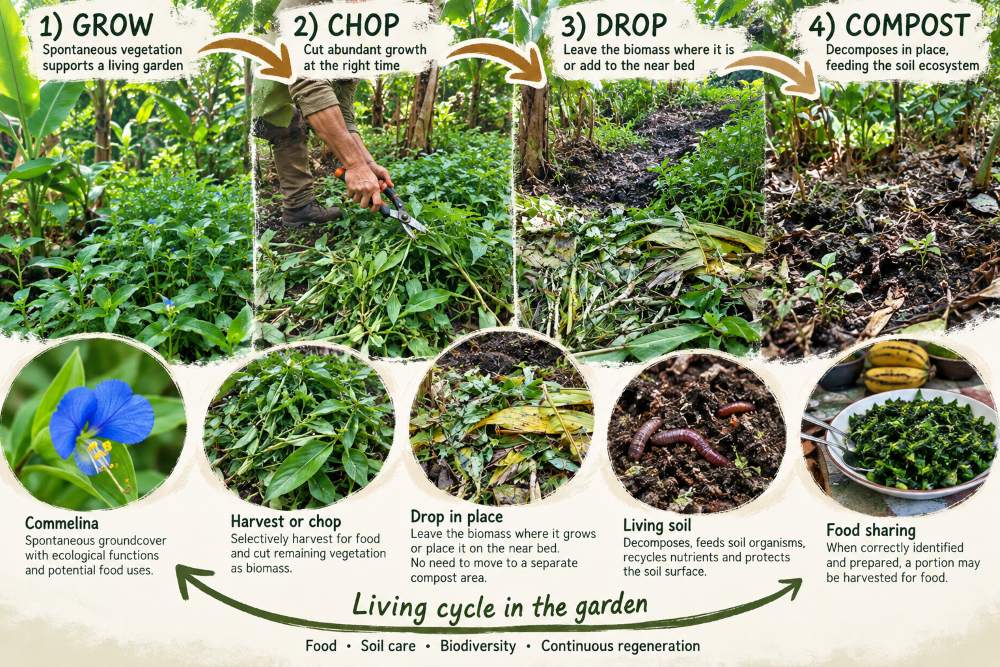
Conceptual illustration based on Ediblescapes Garden practices, incorporating photographic references and generated imagery.
At Ediblescapes Garden, spontaneous vegetation is not managed simply through a distinction between desirable plants and weeds. We observe its growth, ecological relationships and potential contributions to the living garden.
Managing pulses of abundance
Many spontaneous plants experience periods of vigorous growth followed by seasonal decline. These pulses of abundance provide opportunities to harvest vegetation, manage competition and return organic matter to the soil.
Our practice is to cut abundant vegetation when appropriate and use the biomass for in-situ composting and soil regeneration.
The harvested material does not necessarily need to be collected, transported or processed in a separate composting area. It can remain where it was growing, covering and feeding the soil, or be placed directly on an adjacent garden bed where its contribution is beneficial.
As this material decomposes, it contributes organic matter and nutrients to the soil, supports decomposer organisms, helps protect the soil surface and participates in the garden's ongoing biological nutrient cycling.
In this approach, the place where vegetation grows can also become the place where its biomass contributes to the next cycle of life.
From biomass to biocultural food
The conversations documented in the 2022–2026 video introduce another dimension to this practice.
Some spontaneous plants may have documented food uses. When their identity and appropriate preparation have been established, a portion of their abundant growth may be harvested for food, while other vegetation continues contributing biomass to the garden.
Food harvesting and biomass cycling are therefore not necessarily competing purposes. They can become complementary relationships within an agroecological system.
Ecological responsibility and containment
These practices must also respond to the different reproductive characteristics of each species.
For example, Commelina benghalensis can reproduce through rooted stem nodes and seeds, including underground seeds. Freshly cut stems left on moist soil may establish new plants.
Consequently, in-situ biomass management must be adapted to the species, its reproductive stage and the conditions of the garden. Material capable of spreading an introduced environmental weed should be handled or treated to prevent further establishment, rather than automatically left as surface mulch.
The purpose is to retain the ecological benefits of biomass cycling while meeting our responsibility to contain problematic species.
Growing a living soil ecosystem
This practice reflects a wider principle of Ediblescapes Garden: abundance is an opportunity for ecological contribution, not simply a problem requiring removal.
By observing growth cycles, harvesting selectively and returning suitable biomass to the soil where it is produced or needed nearby, we aim to support a regenerative relationship between spontaneous vegetation, cultivated plants, soil organisms and the people caring for the garden.
The garden becomes not only a place where food is harvested, but a living ecosystem in which vegetation continuously contributes to the conditions for future growth.
Sources and Continuing Research
This article combines Ediblescapes Garden observations, recorded community conversations and published botanical and ethnobotanical research.
Botanical identification
- Land for Wildlife South East Queensland — Native vs. Weedy Commelinas. Regional identification guidance for native and introduced species.
- Botany Brisbane — Native & Exotic Commelinas. Comparative botanical characteristics.
Biocultural food knowledge
- Consumption patterns of wild edibles by the Vasavas: a case study from Gujarat, India (2018). Documents local food uses and preparation of several Commelina species.
Living testimony
- Ediblescapes Garden — Commelina: Living Conversations Across the Years, 2022–2026. Video compilation of Botanical Bazaar activities and community food conversations.
Continuing investigation
The identification of plants growing at Ediblescapes Garden, their seasonal behaviour, documented food uses, preparation requirements and ecological management will remain subjects of ongoing observation and research.
As new evidence becomes available, this written knowledge record can be updated while preserving the original community recordings.
source links to make clickable:
This conversation remains open...
What knowledge do you carry?
Have you encountered Commelina in a garden, food tradition or ecological practice?
We welcome observations, cultural memories, research and experiences that can contribute to this evolving knowledge.
The living garden is always speaking. We learn by listening — and by listening to one another.